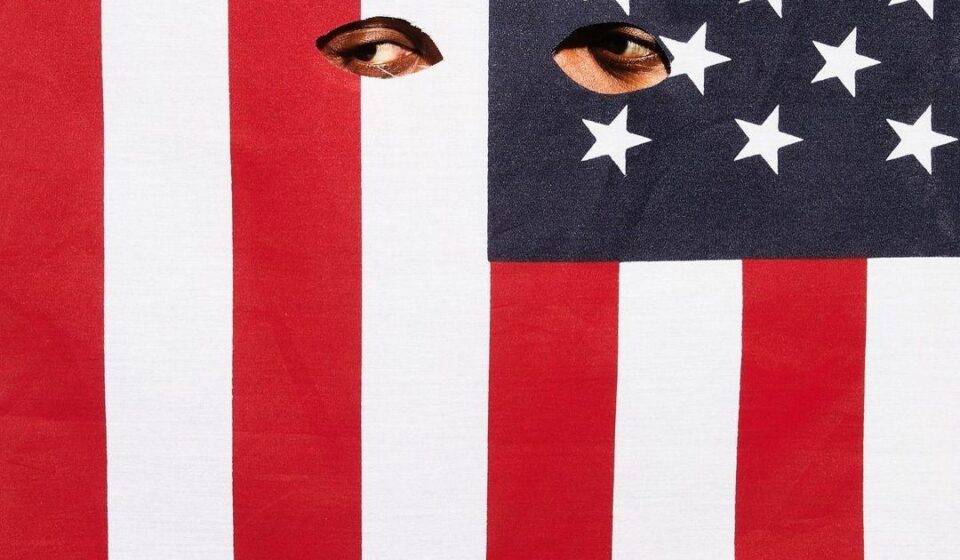

Growing up, I think a lot of us, millennials and Gen Zers alike, carried a genuine sense of hope about the world. Not naive hope. Not the kind that ignores history. But a working hope rooted in the belief that things were trending in the right direction. That progress, however imperfect and uneven, was real. That the arc was bending somewhere worth going.
I grew up admiring public officials. I wanted to be one. I believed in the idea of civic life, of people choosing to serve something larger than themselves. That version of the world shaped who I became.
So what happened?
Because what I see now, every single day, is something I genuinely cannot reconcile with the country I grew up believing in. Rights are being stripped. Institutions are being gutted. And a dangerous cynicism has set in that tells people this is just how it goes. Accept it. Move on. Mind your business.
I refuse.
The Gutting of the Voting Rights Act
There are lines you assume a country will never cross again. Not because you’re naive, but because the cost of crossing them was so catastrophic, so well-documented, that the lesson seemed permanent.
The gutting of the Voting Rights Act crossed one of those lines.
The right to vote is not a partisan issue. It is the foundational mechanism through which a democracy functions and self-corrects. When you make it harder for people to vote, you aren’t just inconveniencing them. You are deciding, on their behalf, that their voice counts less. That is not a conservative principle. That is not even a political principle. It is an authoritarian one. And the fact that we watched it happen in plain sight, with legal cover and institutional approval, should terrify every single one of us regardless of how we vote.
The Immigration Crackdown and Who It Actually Hurts
I am a child of immigrants. I know what it looks like when someone leaves everything familiar to build something from nothing in an unfamiliar place. That kind of courage does not get enough credit.
I understand that laws exist for reasons. Border policy is genuinely complex, and I am not dismissing that. But what has been carried out under the banner of immigration enforcement in recent years is not policy. It is cruelty dressed up as policy. Ripping people out of communities they have built over decades, separating families, terrorizing people who are working, paying taxes, and contributing to the same country that is now treating them as threats, none of that makes America safer. It makes America meaner.
If you think this only affects undocumented people, you are not paying attention. When the government demonstrates that it is willing to treat any group of people as disposable, it is telling you something about its values. And those values will not stop at the border.
The Economy Nobody Wants to Name
We are in a recession. Say it plainly. The indicators are there. Consumer confidence is shattered. Savings are depleted. Credit card debt is at record highs. And yet we still cannot get an honest, public acknowledgment of what everyday people are already living.
The cost of living has become genuinely unbearable for a generation that was told education and hard work were the path to stability. Inflation has made basic necessities a calculation. Wages have not moved in any meaningful way relative to what everything costs. The math does not work, and no amount of optimistic spin from the financial press changes what people feel when they open their bank apps.
Prioritizing Wall Street performance over the material conditions of working people is not a neutral economic choice. It is a values statement. And we are now living inside the consequences of that statement.
A Job Market That No Longer Makes Sense
I know brilliant people. Educated, talented, resourceful, hardworking people who have submitted thousands of applications and cannot get a single callback. Not one.
When that is the reality for people who did everything right, you have to stop blaming the individual and start asking harder questions about the system. What is the actual criteria for employment right now? Because credentials and experience clearly are not enough. The hiring process has become so automated, so opaque, and so disconnected from actual human evaluation that qualified candidates disappear into algorithmic black holes and never resurface.
The social contract around work, the one that said if you put in the effort you would at least get a fair shot, is broken. And nobody in a position of power seems particularly concerned about fixing it.
The Death of the American Dream of Homeownership
Buying a home used to be the baseline aspiration. Not extravagant. Not elite. Just the expectation that if you worked steadily and saved diligently, you could eventually own the place where you slept.
That expectation is gone for most of my generation. Interest rates, inflated prices driven by institutional investors buying up single-family homes at scale, stagnant wages, and crushing student debt have combined to make homeownership a fantasy for millions of people who are otherwise doing everything right. People are not failing to buy homes because they are irresponsible. They are failing because the system is structurally stacked against them and has been for years.
When you take away someone’s ability to build generational wealth, you take away their stake in the future. And people without a stake in the future behave accordingly.
The Existential Dread Is Real
I want to be careful here, because I know this can sound dramatic from the outside. But it is not dramatic. It is accurate.
The feeling of existential dread that has settled across my generation is one of the most underreported stories of our time. No jobs. Unaffordable housing. Political rights under assault. A planet getting hotter. Leaders who seem indifferent at best and malicious at worst. When young people ask what the point is, they are not being nihilistic for sport. They are being logical. They have run the numbers and the numbers are not good.
That hopelessness is a political outcome. It was manufactured through decades of policy decisions that prioritized the comfort of the few over the stability of the many. And it is convenient, because hopeless people do not organize. They scroll. They detach. They survive rather than mobilize. That is exactly what some people are counting on.
So What Now?
I do not have a clean answer. I do not think there is one. But I know that the first step is refusing to accept that this is just how things are. It is not how things have to be. It is how things became through specific choices made by specific people who will be held accountable if enough of us decide they need to be.
The generations ahead of us should be asking what kind of world they are leaving behind. And those of us living through this moment need to ask ourselves something harder: are we going to fight for the future we were promised, or are we going to sit quietly and accept the scraps?
I already know my answer.