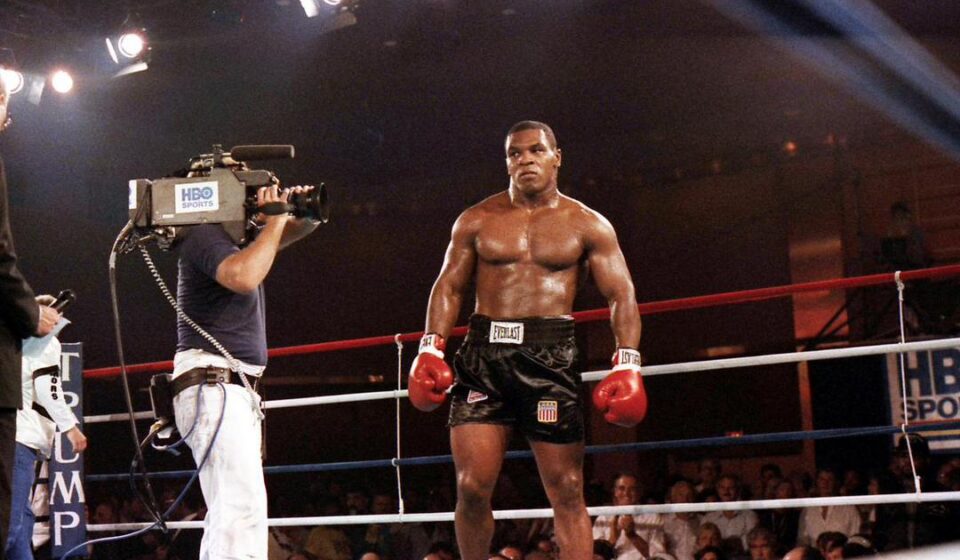

When people think of Mike Tyson, they usually picture pure destruction: fast knockouts, intimidating presence, and total dominance. But behind that public image lies a far more complex story one shaped by psychology, fear, discipline, and unexpected sensitivity.
Here are some lesser-known aspects of his life and career that rarely make mainstream headlines.
- His real weapon wasn’t power—it was psychological pressure
Tyson was not just a physically gifted fighter. His greatest advantage was mental warfare.
Under the guidance of his legendary mentor Cus D’Amato, Tyson mastered the “peek-a-boo” style. But beyond technique, D’Amato trained him to intimidate opponents before the fight even began.
Tyson would often enter the ring with a cold, unreadable stare. Many opponents later admitted they felt defeated before the first punch was thrown. The fight was often already half won in the mind.
- He was constantly afraid before fights
Despite his fearsome reputation, Tyson has openly said he experienced intense fear before every fight.
That fear never disappeared, even at the peak of his career. The difference was that he learned how to convert anxiety into controlled aggression once the bell rang.
This contrast—fear outside the ring, violence inside it—is one of the most misunderstood parts of his legacy.
- He was a heavy reader, especially during prison
The image of Tyson as purely instinctive hides another reality: he was an intense reader.
During his youth and especially while in prison, Tyson studied philosophy, psychology, and strategy. He was drawn to ideas about discipline, control, and human behavior.
This intellectual side is often overlooked because it clashes with his public persona as a purely physical force.
- Pigeons shaped his early life
Before boxing, Tyson was deeply attached to raising pigeons in Brooklyn.
Those birds became his emotional escape in a violent neighborhood. He has often said that some of his earliest fights were triggered when his pigeons were harmed or stolen.
This unusual connection played a major role in shaping his emotional development long before boxing entered his life.
- His public image was carefully built—and heavily exploited
At his peak, Tyson’s career was not only athletic but also heavily commercialized. He was managed and promoted by powerful figures like Don King, whose influence shaped much of Tyson’s public image.
But that same machine also amplified his controversies, pressures, and eventual downfall. Tyson became more than a boxer—he became a global media product, often beyond his own control.
Conclusion
Mike Tyson is not just a story of brute strength and knockouts. He is a story of psychological conditioning, fear management, emotional complexity, and media construction.
Behind the myth of the unstoppable fighter stands a man shaped as much by vulnerability as by violence—and that duality is what continues to make his story so compelling today.